
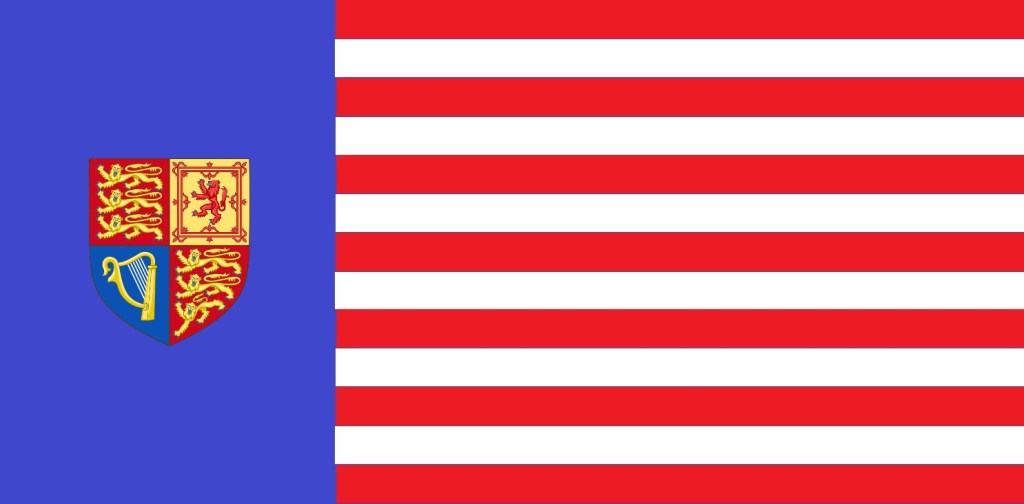
The Civil War within the United States was one for the history books! One side for Abolitionism, and the other seeking to preserve their own way of life through a desperate secession. The Union and Confederacy threw their lot into quite a few battles, however a new force entered the fray in both places: The Royalists.
The Royalists were disillusioned by the Confederacy and Union in a way that they began to reject the Republic. The people could not make a country last for a century without devolving into Civil War, and as such a Monarch must rule: Either an American or the English King.
Civil conflict began as murmurs where military elements began to defect or go missing alongside small scale armories and supply wagons were being raided. Before both Lincoln and Davis could react, multiple uprisings across the United States for the return of a Royal House to control America. At the Battle of Gettysburg, the beleaguered Union and Confederacy were flanked by Royalists. As a consequence, the war seemed to be extended a few more years without a decisive moment of truth.
The Truce
Due to this ultimate threat to the concept of a Republic, the Union and Confederate leadership agreed to a temporary truce until the Royalist threat was bested. However, the truce incurred further instability as soldiers from both nations were upset at the reality that they were fighting, bleeding, and even dying in the fight only to just “agree to fight a common foe”. Numerous seditious papers were posted showcasing the hypocrisy of the situation. “What did my Boy Die For?” was an iconic illustration from this time period, indicating a mother carrying a dead soldier in front of a tombstone. The Royalists gained further civilian sympathy as the entire act showcased the selfishness of both Abraham Lincoln and Jefferson Davis as it was no longer a just war. Protests not aligned with the royalists spread from the South to the North and further collapsed morale.
The End of the Civil War
The Union and Confederate forces managed to hold their ground against the Royalists, thrusting America into a total stalemate until a fateful August of 1871 where in which a Royalist delegation offered a peace agreement where the United States is reunited under the clause of the Confederacy maintaining their slave states but under more stringent federal oversight, the Royalist Party is recognized as a legal party, and the Constitution is modified to allow Royalism to play a part in American Politics. Through severe levels of deliberation, the Union and Confederacy agreed with the Royalist delegation and a peace agreement between all three forces was formed. The House of America was divided no more.
Political Implosion
Due to the severity of the war and wartime behaviors, both the Republican and Democratic Parties began to lose cohesion, causing a devolution to more state-based parties. The Royalist Party maintained its cohesion due to its monolithic goal of reinstating royal rule to the United States, causing a coalition to form by the more Republic aligned parties to act as a check to this threat. Down the road, these political shifts culminated in the creation of later governments in the way they were after the Second World War.
 Fritz Monkor